Complete Guide to Dairy Equipment & Milk Processing Plants: Selection, Capacity & Cost Analysis
Dairy equipment investment ranges from ₹5-50 lakhs depending on capacity and automation level. A 500 LPH milk processing plant costs ₹15-25 lakhs. Ice cream plants cost ₹8-30 lakhs (100-1500 LPH). Ghee making plants cost ₹6-15 lakhs (300-500 LPD). Choosing certified manufacturers with SS 304/316 stainless steel equipment ensures 10-15 year lifespan and ROI within 3-5 years through improved efficiency and product quality.
Why Investing in Proper Dairy Equipment Transforms Your Business
Many dairy entrepreneurs delay equipment investment, trying to operate with minimal machinery. This creates cascading problems that compound over time and ultimately cost far more than proper investment.
The True Cost of Inadequate Equipment
Problem 1: Low productivity and inefficiency Manual or outdated equipment reduces output. A dairy operating at 60% efficiency compared to modern equipment leaves ₹10-20 lakhs annual revenue unrealized. Modern milk processing equipment increases productivity 30-50%.
Problem 2: Quality and contamination issues Non-food-grade equipment causes contamination, spoilage, and customer complaints. Lost batches, customer refunds, and reputation damage exceed ₹2-5 lakhs annually. One contamination incident can destroy customer relationships permanently.
Problem 3: Staff burden and waste Manual processes require more labor. Equipment with poor automation increases labor costs 40-60%. Staff burnout leads to high turnover and training costs. Modern equipment reduces labor needs 30-40%.
Problem 4: Regulatory compliance failures Dairy products require FSSAI, APEDA, or export certifications. Non-compliant equipment fails inspections. Licensing refusal, fines, or business closure result from inadequate equipment.
Problem 5: Limited product expansion Without proper equipment, diversifying from milk to paneer, ghee, or ice cream becomes impossible. Every business faces pressure to expand beyond core offerings. Inadequate equipment locks you into single products.
Problem 6: Capital efficiency loss Operating without proper equipment means struggling to access premium pricing, export markets, or institutional buyers. These buyers require food-grade equipment. Investment in proper equipment unlocks ₹20-50 lakhs additional revenue through market expansion.
Why Equipment Investment is Actually Cost Saving
When analyzed holistically, proper dairy equipment investment reduces total cost of ownership while increasing revenue.
A ₹20 lakh equipment investment generating:
- 40% productivity increase = ₹15 lakh annual revenue increase
- 30% labor cost reduction = ₹3 lakh annual savings
- 100% compliance assurance = ₹2 lakh annual savings (avoiding fines, rejections)
- 25% waste reduction = ₹2 lakh annual savings
- Total annual benefit = ₹22 lakhs
- ROI = 110% (payback in <12 months)
Types of Dairy Equipment Manufacturers and What They Offer
Understanding different equipment categories helps match your business needs with proper solutions.
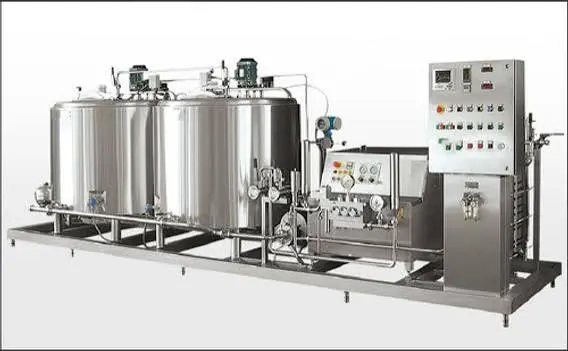
Milk Processing Equipment Manufacturers
What they provide:
- Complete milk collection, cooling, and storage systems
- Pasteurization and sterilization equipment
- Homogenization systems
- Packaging machinery
- Quality control testing equipment
Typical capacities:
- Small units: 100-500 LPH (Liters Per Hour)
- Medium units: 500-1500 LPH
- Large units: 1500-2500 LPH
What to look for:
- Food-grade SS 304/316 construction
- Automated pasteurization (HTST – High Temperature Short Time)
- CIP (Clean In Place) systems
- Temperature monitoring and alarms
- Energy efficiency ratings
Typical cost:
- 500 LPH plant: ₹15-25 lakhs
- 1500 LPH plant: ₹35-50 lakhs
- 2500 LPH plant: ₹50-75 lakhs
Best for: Milk collection centers, cooperative dairies, packaged milk producers
Ice Cream Plant Manufacturers
What they provide:
- Ice cream mix preparation systems
- Freezing and churning equipment
- Hardening chambers
- Packaging and weighing systems
- Quality control systems
Typical capacities:
- Mini units: 100-250 LPH
- Medium units: 250-750 LPH
- Large units: 750-1500 LPH
What to look for:
- Energy-efficient refrigeration
- Quick changeover for different flavors
- Automated portion control
- Cleaning validation systems
- Temperature stability (±2°C)
Typical cost:
- 100 LPH plant: ₹8-12 lakhs
- 500 LPH plant: ₹18-28 lakhs
- 1500 LPH plant: ₹40-60 lakhs
Best for: Ice cream producers, frozen dessert makers, modern dairies diversifying into value-added products
Ghee Making Plant Manufacturers
What they provide:
- Butter preparation systems
- Creamery equipment
- Ghee heating and evaporation systems
- Clarification and filtration equipment
- Cooling and storage systems
- Packaging machinery
Typical capacities:
- Small units: 50-100 LPD (Liters Per Day)
- Medium units: 100-300 LPD
- Large units: 300-500 LPD
What to look for:
- Precise temperature control (120-140°C typical)
- Automated skimming systems
- Continuous monitoring of moisture content
- Efficient heat recovery
- Packaging in food-grade containers
Typical cost:
- 100 LPD plant: ₹5-8 lakhs
- 300 LPD plant: ₹10-14 lakhs
- 500 LPD plant: ₹14-20 lakhs
Best for: Ghee producers, traditional dairies, FMCG brands requiring bulk ghee
Integrated Dairy Equipment Manufacturers
What they provide:
- Complete end-to-end solutions combining multiple processes
- Custom integration of milk processing + ghee making + ice cream production
- Single vendor responsibility for entire plant
- Consolidated after-sales support
- Scaled production planning
Advantages:
- Equipment compatibility guaranteed
- Single point of contact for troubleshooting
- Integrated quality control
- Standardized training for operators
- Coordinated spare parts availability
Typical cost: 15-30% premium over purchasing individual components separately, but justified through integration benefits
Selecting the Right Dairy Equipment Manufacturer: Critical Evaluation
Choosing your equipment manufacturer is one of the most important decisions for your dairy business. Poor choice affects productivity, product quality, and profitability for 10-15 years.
Essential Manufacturer Evaluation Criteria
Manufacturing Experience and Track Record:
- Verify years in business (minimum 10-15 years for reliability)
- Check number of installations across India
- Request references from similar-sized operations
- Review case studies and testimonials
- Verify compliance certifications
Technical Specifications and Quality:
- Food-grade SS 304/316 stainless steel construction
- Automation level (semi-automatic vs fully automatic)
- Energy efficiency ratings
- Capacity documentation
- Hygiene and sanitation certifications (FSSAI compliance)
Customization and Scalability:
- Ability to customize equipment for specific needs
- Future scalability options (can you increase capacity later?)
- Flexibility in material sourcing
- Adaptive design for regional variations
- Integration with existing infrastructure
After-Sales Support and Service:
- Local service centers in your region
- Spare parts availability and pricing
- Technician training provided
- Response time for maintenance calls
- Warranty coverage and terms
Cost Transparency:
- Detailed quotation breakdown
- Hidden costs disclosure
- Installation, commissioning, training included?
- Spare parts costs (ask for price list)
- Payment terms and conditions
Questions to Ask Manufacturers
Technical depth:
- What materials are used? (Verify SS 304/316 specifically)
- What automation level does this model offer?
- How many liters/day throughput is realistic?
- What’s energy consumption per liter?
- What temperature control precision is guaranteed?
Compliance and safety: 6. Is this FSSAI-compliant? (Request certification) 7. What hygiene validations are included? 8. Are CIP systems included or additional? 9. What cleaning validation protocols do you provide? 10. Are SOP manuals provided in local language?
Service and support: 11. Where’s your nearest service center? 12. What’s average response time for breakdowns? 13. How long does training typically take? 14. Can you provide 24/7 support if needed? 15. What’s warranty coverage and duration?
Experience and references: 16. How many similar-capacity plants have you built? 17. Can you provide references I can contact? 18. Do you have installations in my state/region? 19. What’s your average customer retention rate? 20. Can I visit an installed facility?
Red Flags When Evaluating Manufacturers
Unrealistic promises:
- “100% uptime guarantee” (no equipment is 100% uptime)
- “Zero maintenance required” (all equipment needs maintenance)
- “Instant ROI” (3-5 years is realistic timeline)
Lack of transparency:
- Vague specifications or technical details
- Hidden costs appearing after agreement
- Can’t provide detailed equipment documentation
- Unclear about what’s included in quotation
Quality shortcuts:
- Using mild steel instead of SS 304/316
- Rushing installation without proper testing
- Limited warranty (less than 12 months is concerning)
- No references available
- Unwilling to discuss hygiene protocols
Poor communication:
- Slow response to inquiries
- Unclear explanations of specifications
- Unable to provide documentation in your language
- No follow-up after initial quotation
Cost Breakdown: What You Actually Pay for Dairy Equipment
Understanding cost components prevents budget surprises.
Milk Processing Plant Costs (500 LPH Example)
| Component | Cost Range |
| Equipment (pasteurization, cooling, storage) | ₹10-15 lakhs |
| Installation and setup | ₹1.5-2.5 lakhs |
| Testing and validation | ₹1-1.5 lakhs |
| Training (operators and maintenance) | ₹0.5-1 lakh |
| Initial spare parts kit | ₹1-2 lakhs |
| Civil works (if needed) | ₹1-3 lakhs |
| Electrical integration | ₹0.5-1 lakh |
| TOTAL INVESTMENT | ₹15-25 lakhs |
Operating Costs (Annual, 500 LPH plant running 250 days/year)
| Cost Category | Annual Cost |
| Electricity (average 3-5 units per liter) | ₹3-5 lakhs |
| Maintenance and spare parts | ₹1.5-2.5 lakhs |
| Operator salaries (2 people) | ₹4-6 lakhs |
| Cleaning chemicals and materials | ₹0.5-1 lakh |
| Preventive maintenance contracts | ₹0.5-1 lakh |
| TOTAL ANNUAL COST | ₹9.5-15.5 lakhs |
| Cost per liter (at 500 LPH, 250 days) | ₹0.76-1.24 |
Ice Cream Plant Costs (500 LPH Example)
| Component | Cost Range |
| Equipment | ₹18-25 lakhs |
| Installation and cooling setup | ₹2-3.5 lakhs |
| Testing and commissioning | ₹1.5-2 lakhs |
| Training | ₹0.5-1 lakh |
| Spare parts kit | ₹1.5-2 lakhs |
| Civil works (if needed) | ₹2-4 lakhs |
| TOTAL INVESTMENT | ₹25-37.5 lakhs |
Ghee Making Plant Costs (300 LPD Example)
| Component | Cost Range |
| Equipment | ₹8-12 lakhs |
| Installation | ₹1-1.5 lakhs |
| Testing | ₹0.5-1 lakh |
| Training | ₹0.3-0.5 lakh |
| Spare parts | ₹1-1.5 lakhs |
| Civil works | ₹1-2 lakhs |
| TOTAL INVESTMENT | ₹11.8-18 lakhs |
ROI Analysis: When Does Dairy Equipment Investment Pay Off?
Proper equipment investment typically shows ROI within 3-5 years.
Milk Processing Plant ROI Example
Investment: ₹20 lakhs Annual operating cost: ₹12 lakhs Daily processing: 500 liters Working days: 250 per year Annual milk processed: 125,000 liters
Revenue scenarios:
| Model | Price/Liter | Annual Revenue | Annual Profit | Payback Period |
| Bulk milk supply | ₹22 | ₹27.5 lakhs | ₹15.5 lakhs | 15 months |
| Packaged milk | ₹28 | ₹35 lakhs | ₹23 lakhs | 10.5 months |
| Value-added products | ₹35+ | ₹43.75+ lakhs | ₹31.75+ lakhs | 7-8 months |
Long-term benefit (5 years):
- Total revenue: ₹137.5-218 lakhs
- Total costs: ₹60 lakhs (equipment + operating)
- Net profit: ₹77.5-158 lakhs
Ghee Making Plant ROI Example
Investment: ₹15 lakhs Daily production: 300 liters ghee (from 1000 liters milk) Annual production: 75,000 liters ghee Market price: ₹350-400 per liter
Annual revenue: ₹262.5-300 lakhs (at wholesale) Annual costs: ₹8 lakhs (operating + maintenance) Annual profit: ₹254.5-292 lakhs Payback period: 1-2 months
Compliance and Certification: What Your Equipment Must Meet
Different applications require different certifications. Choosing equipment meeting requirements prevents costly compliance issues.
FSSAI Compliance
Required for: All milk and dairy processing in India What it verifies: Food safety standards, hygiene protocols, equipment standards Equipment requirements: SS 304/316 stainless steel, automated cleaning, temperature monitoring Typical cost: Included in certified equipment, ₹1-2 lakhs for compliance validation
APEDA Standards (For Export)
Required for: Ghee, paneer, cheese export Standards: Dairy products must meet international hygiene standards Equipment needs: Enhanced hygiene, automated validation systems Additional cost: ₹2-3 lakhs for export-grade setup
ISO 22000 Certification
Optional but valuable: Food safety management system Benefits: Access to institutional buyers, premium pricing, market differentiation Implementation: 3-6 months, ₹1-2 lakhs cost
IS Standards for Dairy Equipment
IS 1737: Stainless steel equipment specifications IS 2735: Dairy plant safety requirements IS 6731: Microbiological testing standards Certified manufacturers: Include compliance automatically
Frequently Asked Questions About Dairy Equipment
What’s the difference between semi-automatic and fully automatic equipment?
Semi-automatic equipment requires operator intervention for some processes. Fully automatic equipment runs with minimal intervention. Fully automatic costs 20-40% more but reduces labor by 30-50% and produces more consistent results. Choose based on your labor availability and budget.
How long does dairy equipment typically last?
Quality dairy equipment with proper maintenance lasts 10-15 years. Annual maintenance (cleaning, bearing replacement, seal inspection) is essential. Poor maintenance can reduce lifespan to 5 years. Regular maintenance is actually cost-saving compared to emergency repairs.
Can I start small and expand equipment later?
Yes, most reputable manufacturers design equipment for future scalability. Typically you can upgrade from 500 LPH to 1000 LPH by adding additional processing modules. Discuss scalability options with manufacturer during selection.
What’s the difference between HTST and batch pasteurization?
HTST (High Temperature Short Time): 72°C for 15 seconds. Better milk shelf-life, higher capacity, more expensive equipment. Batch: Lower temperatures, longer holding times. Lower cost but reduced shelf-life. HTST is recommended for modern dairies targeting packaged milk market.
Do I need a dedicated facility for dairy equipment?
Yes, food-grade facilities are required. Minimum requirements: proper flooring (sloped for drainage), walls and ceiling (washable), separate processing areas, water and waste management. Plan ₹5-10 lakhs for proper facility setup.
How often does dairy equipment need maintenance?
Daily cleaning is essential (included in operation). Weekly maintenance checks for seals, bearings, and gauges. Monthly preventive maintenance. Annual professional servicing. Maintenance cost averages 8-12% of equipment cost annually.
What’s the typical training period for operating dairy equipment?
Operators typically require 1-2 weeks training. Maintenance technicians need 2-4 weeks. Ongoing training updates annually. Good manufacturers include training in their quotation.
Can I use dairy equipment for non-dairy applications?
Generally not recommended. Food-grade SS 304/316 equipment is specifically designed for dairy products. Using for non-food purposes voids warranty and may contaminate future dairy production.
What happens if equipment breaks down mid-production?
This is where manufacturer support matters. Reputable manufacturers with local service centers respond within 24 hours. Breakdown can cost ₹5,000-20,000 in lost production per hour. This is why choosing reliable manufacturers is critical.
Is equipment financing available?
Yes, many equipment manufacturers offer financing options. Banks and NBFCs provide dairy equipment loans at 8-12% interest. Dairy equipment qualifies for NABARD subsidies in some states. Check with your manufacturer about financing options.
Making Your Equipment Selection Decision
Choosing dairy equipment is a major capital decision affecting your business for 10-15 years.
Selection Checklist
Phase 1: Planning
- [ ] Define your target production capacity
- [ ] Calculate required budget (equipment + facility + training)
- [ ] Identify products you want to produce
- [ ] Research 3-5 reputable manufacturers
- [ ] Understand regulatory requirements for your products
Phase 2: Evaluation
- [ ] Request detailed quotations from shortlisted manufacturers
- [ ] Ask for references and visit installed facilities
- [ ] Verify certifications and compliance documentation
- [ ] Compare technical specifications
- [ ] Evaluate after-sales support capabilities
Phase 3: Negotiation
- [ ] Negotiate pricing (especially for larger orders)
- [ ] Clarify what’s included in quotation
- [ ] Discuss customization options
- [ ] Finalize warranty and service terms
- [ ] Confirm training and documentation
Phase 4: Implementation
- [ ] Prepare facility (construction, utilities)
- [ ] Plan equipment installation timeline
- [ ] Arrange financing if needed
- [ ] Schedule staff training
- [ ] Test and validate equipment before production
Ready to Transform Your Dairy Business?
Proper dairy equipment investment is one of the most impactful decisions you’ll make. It determines your production capacity, product quality, regulatory compliance, and profitability for the next decade.
Work with an experienced dairy equipment manufacturer who understands your specific needs and can provide comprehensive support from selection through installation and beyond.
Request Dairy Equipment Quotation – Discuss your specific production requirements and get a customized equipment solution with transparent pricing.
Or contact directly:
- WhatsApp: +91 9990193331
- Call: 0120-4243331
- Email: info.maxonova@gmail.com
Leave A Comment