
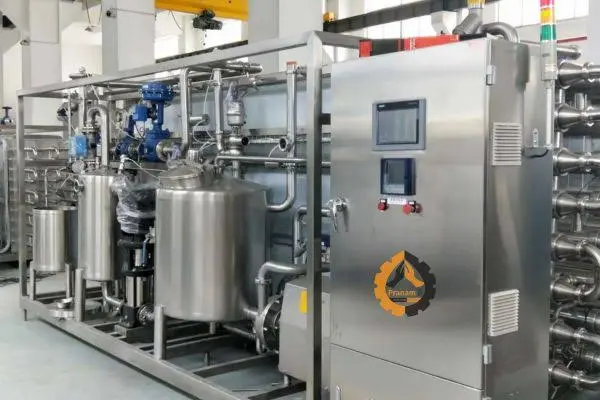
Sizing a Dairy Plant: What 500, 1000, 2000 and 2500 LPH Actually Mean
LPH means litres per hour, and it rates the pasteuriser rather than the plant’s daily output. A 1000 LPH plant running two four hour shifts processes roughly 8,000 litres a day, not 1,000.
This distinction causes more sizing errors than any other. Buyers compare their daily milk procurement against the LPH figure, conclude they need a much larger plant than they do, and spend heavily on capacity that runs at a fraction of its rating.
The correct method is to divide your peak daily volume by the hours you can realistically process, then add headroom for growth and for flush season.
Capacity at a Glance
| Rating | Daily output at 4 hours | Daily output at 8 hours | Typically suits |
| 500 LPH | 2,000 litres | 4,000 litres | Small dairy startups, farm level processing, single village collection |
| 1000 LPH | 4,000 litres | 8,000 litres | Growing private dairies, FPOs, small cooperative units |
| 2000 LPH | 8,000 litres | 16,000 litres | Established regional dairies, multi village collection |
| 2500 LPH | 10,000 litres | 20,000 litres | Larger regional operations, expanding brands, institutional supply |
Figures assume continuous running at rated throughput. In practice, allow for start up, changeover between products and CIP time, which typically consume one to two hours across a working day.
Sizing Against Your Actual Operation
Six factors decide the right rating. Work through them in order.
1. Peak daily procurement, not average. Indian milk supply is seasonal. Flush season, broadly from October through March, delivers substantially higher volumes than lean season. Size against the peak, or you will be diverting milk during your best months.
2. Available processing hours. Milk arrives in two shifts in most operations. Your processing window is shaped by when milk reaches the dock, when the packed product must leave, and how many operators you can staff. A plant sized for eight hours a day that only has four hours of usable window is effectively half the plant you paid for.
3. Growth over three to five years. Upgrading a pasteuriser later is possible. Resizing utilities, piping, drainage and floor layout afterwards is expensive and disruptive. It is usually cheaper to lay out the building and utilities for the next capacity step even if you install the current one.
4. Product mix. Liquid milk in pouches is the simplest line. Curd, paneer, ghee, flavoured milk and khoa each add equipment, space and processing time, and they reduce the hours available for liquid milk.
5. Space and site constraints. Covered below.
6. Power availability. A sanctioned load that cannot support the plant is a project stopping problem, and upgrading a connection can take months.
Indicative Space and Utility Requirements
| Rating | Approximate covered area | Typical connected load | Steam requirement | Water requirement |
| 500 LPH | 1,500 to 2,500 sq ft | 25 to 40 kW | Small boiler | Roughly 2 to 3 litres per litre processed |
| 1000 LPH | 2,500 to 4,000 sq ft | 40 to 60 kW | Small to medium boiler | Same ratio |
| 2000 LPH | 4,000 to 6,000 sq ft | 60 to 100 kW | Medium boiler | Same ratio |
| 2500 LPH | 5,000 to 8,000 sq ft | 80 to 120 kW | Medium boiler | Same ratio |
These are indicative and vary considerably with configuration, product mix and whether utilities sit inside or outside the main building. Confirm against a specific layout before committing to a site.
Two points that catch first time buyers. Water consumption runs at roughly two to three times the milk volume once cleaning and CIP are included, so water availability is a genuine site selection criterion. And effluent volume is close to water consumption, which means an effluent treatment plant is not optional at these capacities.
What a Complete Plant Includes
| Section | Equipment |
| Reception | Weigh bowl or dump tank, receiving pump, duplex filter |
| Chilling | Plate chiller with chilled water, or bulk milk cooler |
| Storage | Insulated stainless steel silos or storage tanks |
| Processing | Cream separator, homogeniser where required, HTST plate pasteuriser with holding tube, hot water set and flow diversion valve, balance tank |
| Post pasteurisation | Pasteurised milk storage tanks |
| Packing | Pouch form fill seal machine, bottle filler or crate line, depending on product |
| Cleaning | CIP system, two or three tank depending on scale |
| Utilities | Boiler, ice bank tank or chiller, air compressor, water softener or RO, DG set |
| Controls | Control panel, PLC and HMI, temperature recording |
| Quality | Laboratory equipment for fat, SNF, adulteration and microbiological testing |
Pasteurisation for market milk in India is conventionally carried out at 72 degrees Celsius for 15 seconds using an HTST plate system, with automatic flow diversion if the temperature falls below set point. Verify the specification and control philosophy in any quotation, since the diversion arrangement is a food safety control and not an optional extra.
The full range of milk processing plant configurations covers these sections across the four capacity steps.
How Product Mix Changes the Plant
| Product | Additional equipment required |
| Pouch milk | Pouch filling machine, crate handling |
| Curd or dahi | Incubation room, cup filling and sealing machine |
| Paneer | Paneer vat, press, chilling and cutting area |
| Ghee | Butter melting vat, ghee kettle, clarifier, packing line |
| Flavoured milk | Mixing tank, bottle or PET filling, secondary heat treatment |
| Khoa | Khoa making machine, cooling and packing |
| Cheese | Cheese vat, press, curing and cold storage |
Value added products carry substantially better margins than liquid milk, which is why most operations add them within the first two or three years. Plan the building layout and utility headroom for them at the outset even if the equipment comes later, since retrofitting a paneer or ghee section into a building designed only for pouch milk usually means rebuilding.
What Drives the Cost
The equipment price for the same nominal capacity can vary by a factor of two or more. These are the reasons.
- Scope. Equipment supply only, versus turnkey including civil coordination, piping, utilities, installation and commissioning. Compare like with like or the comparison is meaningless.
- Material specification. SS 304 versus SS 316 in product contact areas, plate thickness, surface finish, gasket grade.
- Level of automation. Manual operation, semi automatic, or full PLC with SCADA and batch recording.
- Utilities included or excluded. Boiler, chiller, DG set and water treatment are substantial line items and are frequently quoted separately.
- Packing line specification. Machine speed, number of lanes, and whether date coding and secondary packing are included.
- Effluent treatment. Almost always quoted separately, and required.
- Imported versus domestic components. Particularly homogenisers, separators, plates and instrumentation.
Ask every supplier to mark each of these as included, excluded or optional. A quotation without that breakdown cannot be compared against another.
Regulatory and Approval Checklist
Requirements change and vary by state. Confirm each with the relevant authority or a qualified consultant rather than relying on general guidance.
- FSSAI licence, with the category and licence type determined by capacity and turnover
- FSSAI Schedule 4 hygiene and sanitary requirements for the building and process layout, which affect design and must be considered before construction rather than after
- State Pollution Control Board consent to establish and consent to operate, driven largely by effluent volume
- Boiler registration with the state boiler inspectorate where applicable
- Factory licence, fire NOC and local municipal approvals
- Legal Metrology compliance for packaged quantity declarations
- BIS standards applicable to the specific milk products being made
Layout for FSSAI compliance is the one that most often causes rework. Product flow, personnel movement and the separation of raw and pasteurised areas need to be designed in from the beginning.
Government support schemes for dairy infrastructure exist at both central and state level and change periodically. Check current eligibility and terms before finalising your project cost, since subsidy or interest subvention can materially change the financing structure.
Questions to Ask Before You Order
- Is this a turnkey scope or equipment supply only, and exactly where does your responsibility end?
- What material grade is specified for each product contact surface?
- Is the pasteuriser rating at continuous throughput, and what is the realistic output per shift after CIP and changeover?
- What is included in the utility scope, and what must we arrange?
- What is the delivery lead time from order to dispatch, and from dispatch to commissioning?
- Is installation, commissioning and operator training included, and for how many days?
- What documentation is provided, including general arrangement drawings, P&ID, utility matrix and operation and maintenance manuals?
- What is the warranty, what does it cover, and what is excluded?
- Where is your nearest service engineer, and what is your response time commitment?
- Can we visit a plant of this capacity that you have commissioned and speak to the owner?
Question ten separates suppliers quickly. A commissioned reference plant of the same capacity, visited without the supplier present, tells you more than any specification sheet.
Our completed installations span the full capacity range and reference visits can be arranged.
Typical Project Timeline
| Stage | Duration |
| Requirement study, layout and final specification | 2 to 4 weeks |
| Order to fabrication completion | 8 to 16 weeks depending on capacity and scope |
| Civil work and utility readiness at site | Runs in parallel, typically 8 to 16 weeks |
| Installation and piping | 3 to 6 weeks |
| Commissioning, trials and operator training | 1 to 3 weeks |
| Regulatory approvals | Runs in parallel, start early |
Realistically four to seven months from order to production for a plant in this range, assuming site readiness keeps pace. The most common cause of delay is civil work and power connection lagging behind equipment delivery, so sequence those first.
Turnkey execution, where a single party carries responsibility for equipment, installation and commissioning, is covered under our turnkey dairy solutions.
Frequently Asked Questions
What does LPH mean in a milk processing plant?
LPH stands for litres per hour and refers to the throughput rating of the pasteuriser. It is not the daily capacity. A 1000 LPH plant running eight hours processes approximately 8,000 litres a day, before allowing for start up, changeover and cleaning time.
How do I choose between a 1000 LPH and a 2000 LPH plant?
Divide your peak daily milk volume by the number of hours you can realistically process each day. Add headroom for three to five years of growth and for flush season volumes. If the result sits between two ratings, consider the larger one if the building and utilities can support it, because upgrading later is far more disruptive than oversizing modestly at the start.
How much space does a 1000 LPH milk processing plant need?
Typically 2,500 to 4,000 sq ft of covered area, depending on product mix, whether utilities are housed inside, and how much cold storage and packing space is required. A layout drawing against your specific site is the only reliable way to confirm.
What is the daily capacity of a 500 LPH plant?
Approximately 2,000 litres over four hours of running, or 4,000 litres over eight hours, before deducting time for cleaning and changeover.
What utilities does a milk processing plant require?
Steam from a boiler for pasteurisation and hot water, chilled water from an ice bank tank or chiller, compressed air for pneumatic valves, treated water for process and cleaning, electrical supply with standby generation, and effluent treatment. Water consumption typically runs at two to three times the volume of milk processed.
Is an effluent treatment plant necessary?
Yes, in these capacities. Dairy effluent volume approaches water consumption, and State Pollution Control Board consent is conditional on adequate treatment. It is almost always quoted separately from the processing equipment, so confirm whether it is inside or outside your supplier’s scope.
How long does it take to set up a milk processing plant?
Typically four to seven months from order to production, covering fabrication, civil work, installation, commissioning and training. Regulatory approvals and power connection should be started at the same time as the equipment order, since they are the most common cause of delay.
Can capacity be increased later?
Partially. Pasteuriser capacity can sometimes be increased by adding plates, and additional storage or packing capacity can be added. However, utilities, piping, drainage and floor layout are difficult and costly to resize. Planning the building and utility headroom for the next capacity step at the design stage is significantly cheaper than retrofitting.
Get a Layout Before You Get a Quotation
The right capacity is determined by your peak volume, your available processing window and your product plan. A quotation issued before those three are established is a price for something that may not fit your operation.
Send us your daily milk volume, your intended product mix and your site dimensions, and we will propose a capacity and layout with the utility requirements set out before any commercial discussion.
Leave A Comment